background

Knowledge Hub

What is Blue Economy

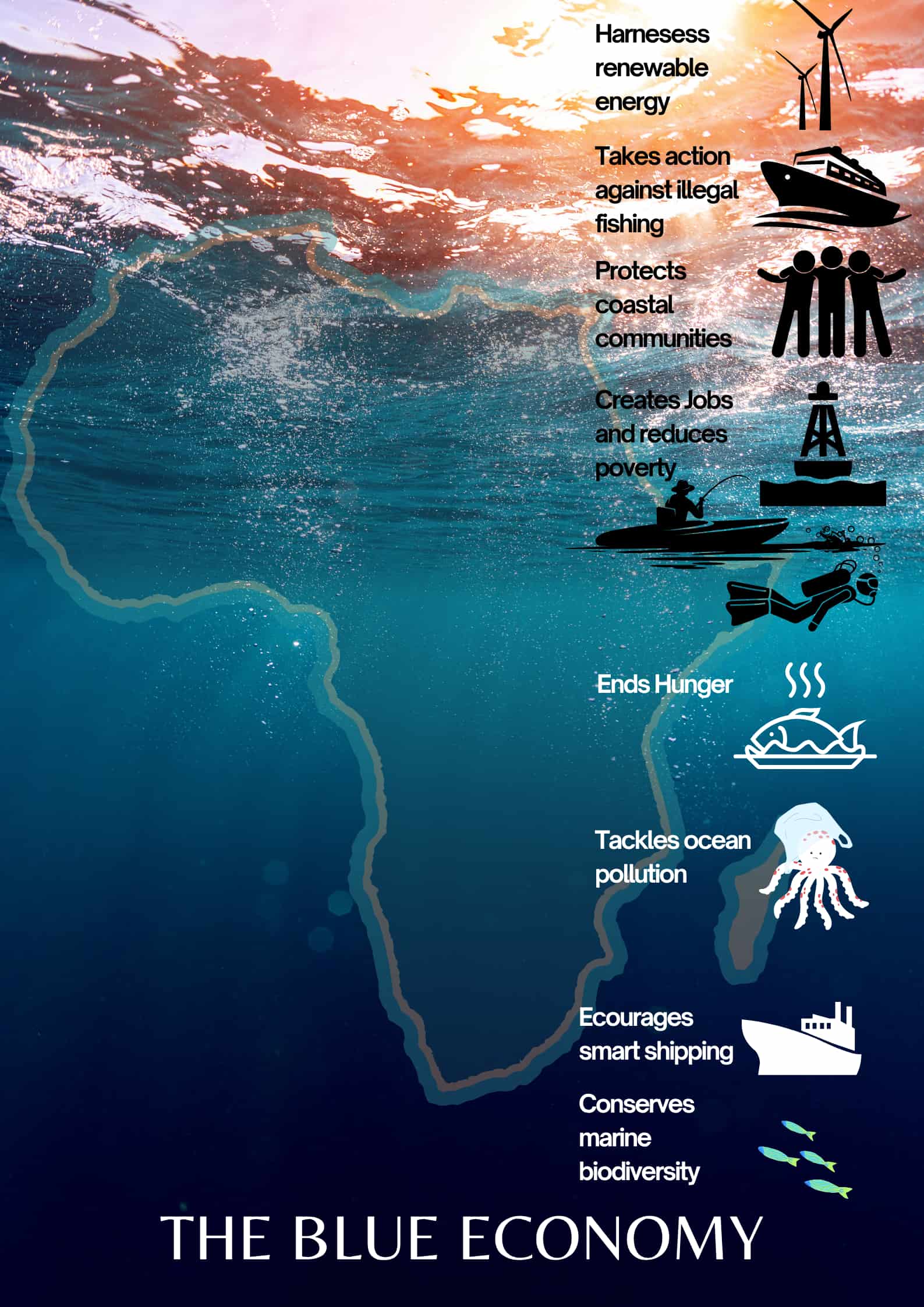
Blue Economy refers to the sustainable use, management, and conservation of oceanic, coastal, and inland aquatic resources including seas, coasts, rivers, and lakes in order to promote economic growth, food security, employment, and climate resilience while ensuring the health of ecosystems and the rights of local communities. It encompasses a wide range of sectors such as fisheries and aquaculture, ports and maritime transport, coastal and marine tourism, marine renewable energy, seabed mining, marine biotechnology, maritime services, and nature-based coastal protection.
logo

As a development framework, Blue Economy advances a holistic approach that balances economic utilization of aquatic resources with environmental stewardship. It recognizes that oceans and other water bodies are critical natural capital assets that, if managed sustainably, can drive inclusive growth while maintaining ecological integrity. This approach underscores the need for rational and sustainable exploitation of both renewable and non-renewable aquatic resources, ensuring the long-term viability of aquatic ecosystems and the prosperity of the communities that depend on them.

Listen

Country Profiles

The African continent is richly endowed with extensive aquatic and marine resources including oceans, seas, rivers, and lakes that hold immense potential for advancing the blue economy. Africa comprises 38 coastal states and several island nations such as Cape Verde, São Tomé and Príncipe, Mauritius, Seychelles, Madagascar, and the Comoros, many of which are Small Island Developing States (SIDS). Collectively, these coastal and island states command vast ocean territories estimated at about 13 million km², making aquatic and marine ecosystems a strategic asset for the continent.

These resources underpin key economic activities such as fisheries and aquaculture, shipping, coastal tourism, offshore oil and gas, renewable marine energy, and other blue economy sectors.

Kenya

Kenya has a 536 km coastline along the Indian Ocean, hosting the major port of Mombasa and extensive inland water bodies including Lakes Victoria, Turkana, Naivasha and Baringo.

Read More

Uganda

Though landlocked, Uganda possesses vast freshwater resources, notably Lake Victoria one of the world’s largest lakes and extensive river networks. Its blue economy focuses on inland fisheries, aquaculture, water transport, and lake tourism.

Read More

Ghana

Located along the Gulf of Guinea, Ghana’s blue economy features vibrant fisheries, offshore oil and gas, ports (Tema and Takoradi), and coastal tourism.

Read More

Nigeria

Nigeria has a long Atlantic coastline and one of Africa’s largest economies. It boasts significant oil and gas reserves in the Niger Delta, large artisanal and industrial fisheries, and major ports such as Lagos and Port Harcourt.

Read More

Resources

Africa Blue Economy
Strategy

Read More

Revised African Maritime Transport Charter

Read More

United Nations Convention on the Law of the Sea

Read More

Convention on Biological Diversity (CBD)

Read More

Regional Seas Strategic Directions 2022-2025

Read More

Nairobi Convention for the Western Indian Ocean

Read More

Teaching Aids for Children

post image